


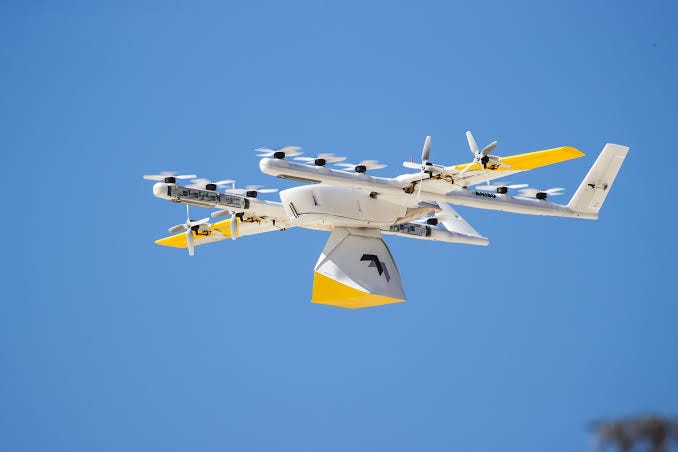
Drone IPOs are quickly becoming one of the hottest IPO’s on the market. Swarmer (SWMR) priced its Nasdaq debut at $5 a share in March. Shares opened at $12.50 and closed day one at $31, a 520% gain that made it the single biggest mover on any US exchange that day. The stock kept climbing from there. By June 2 it touched an intraday high of $83.30, a run of more than 1,500% from the offering price in under three months. Shares have since pulled back to around $42, still a gain of roughly 740% for anyone who got the IPO allocation. Swarmer sells swarm-control software: one operator managing up to 690 drones at once. Investors bought the story because the demand behind the use case is becoming reality. Countries around the world are racing to automate their society, and Wall Street just watched a company built for that exact reason go public and rip higher than anyone thought possible.
The obvious question follows: who’s next? Anduril and Saronic sit at the top of every defense-tech watchlist for a reason, and Wing, Alphabet’s delivery-drone unit, has built the kind of operational scale that public investors reward. Below are those three, plus two more names, for my premium subscribers, that I think have a high likelyhood of IPOing soon. None of these companies trade publicly today and all five are raising capital, signing government and enterprise contracts, and building a revenue base that is, or eventually will, turn heads. I’ve created this list for you so the next Swarmer-style pop doesn’t catch you looking the other way with a serious case of FOMO.
Anduril Industries
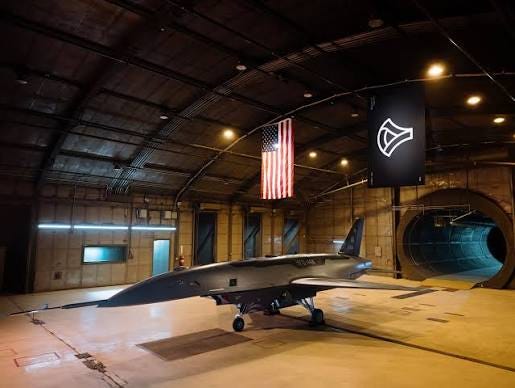
Anduril builds the hardware and software for autonomous warfare, and its funding trajectory reveals the demand is only rising. The company closed a $5 billion Series H in May, led by Thrive Capital and Andreessen Horowitz, pushing its valuation to $61 billion. That figure doubled the $30.5 billion mark Anduril carried just a year earlier.
The product line spans every domain the Pentagon cares about. Ghost and Bolt are reconnaissance and attack drones. The Altius 600M and 700M are loitering munitions. Fury is Anduril’s entry in the Air Force’s Collaborative Combat Aircraft program, an autonomous jet built to fly alongside crewed fighters. Every system runs on Lattice OS, Anduril’s command-and-control software that stitches sensors, drones, and other hardware into a single real-time picture of the battlefield. Lattice is the part of the business that scales fastest, since it can sell into other manufacturers’ hardware and not just Anduril’s own.
June brought the company’s biggest program win yet. The Air Force picked Anduril’s FQ-44A Fury alongside General Atomics’ FQ-42A Dark Merlin to build the first production Collaborative Combat Aircraft, with a plan to field at least 150 of the jets by the end of the decade. That award landed four months ahead of the Air Force’s own schedule. Anduril is backing the contract with tangible manufacturing capacity: Arsenal-1, a $1 billion, 5-million-square-foot autonomous weapons plant in Ohio. The first building, about 1 million square feet, is finished, and Fury production started there in March. For investors watching the IPO calendar, Anduril checks every box a public market wants to see: a valuation that has doubled twice in two years, a product line that spans drones, jets, and software, and a Pentagon program of record that converts a story into a multi-year manufacturing contract.
Saronic
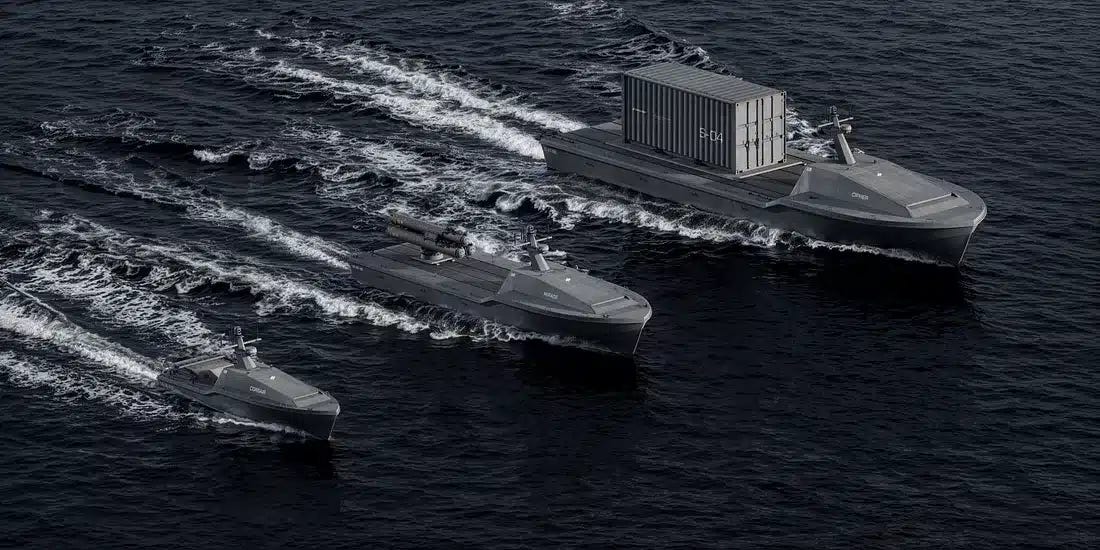
Saronic does for the ocean what Anduril does for the sky and the SkyForge for the ground: autonomous vessels built to remove sailors from the most dangerous and repetitive maritime missions. The Austin-based company closed a $1.75 billion Series D in March, led by Kleiner Perkins with participation from Advent International, Bessemer Venture Partners, Franklin Templeton, and Andreessen Horowitz. The round more than doubled Saronic’s valuation to $9.25 billion, up from $4 billion less than a year prior.
The product strategy is the interesting part. Saronic builds one autonomy stack and pours it into six hull sizes: the 6-foot Spyglass for tactical reconnaissance, the 14-foot Cutlass for extended patrol, the 24-foot Corsair for multi-mission ops with 1,000-plus nautical miles of range, the larger Mirage and Cipher, and the 180-foot Marauder logistics vessel capable of hauling 150 metric tons in shipping containers. A navigation or targeting update tested on the smallest boat pushes as software to the largest one. That shared codebase is their powerful and unique moat. The Navy has started treating Saronic like a program of record with its technology being actively used in the Middle East to save 2 pilots in a downed helicopter. NAVSEA signed a $392 million Other Transaction Authority agreement running through 2031, with an initial award near $197 million, marking the shift from research contracts to production orders. Saronic’s shipyard in Franklin, Louisiana is mid-expansion on a $300 million buildout, with a target of more than 20 ships a year by 2027.
Public markets have no pure-play autonomous-ship stock today. Saronic’s combination of a graduated product line, a Navy production contract, and a valuation still doubling year over year makes it the most direct maritime answer to Anduril’s air-and-land dominance. One of the top companies to watch for an IPO.
Wing Aviation
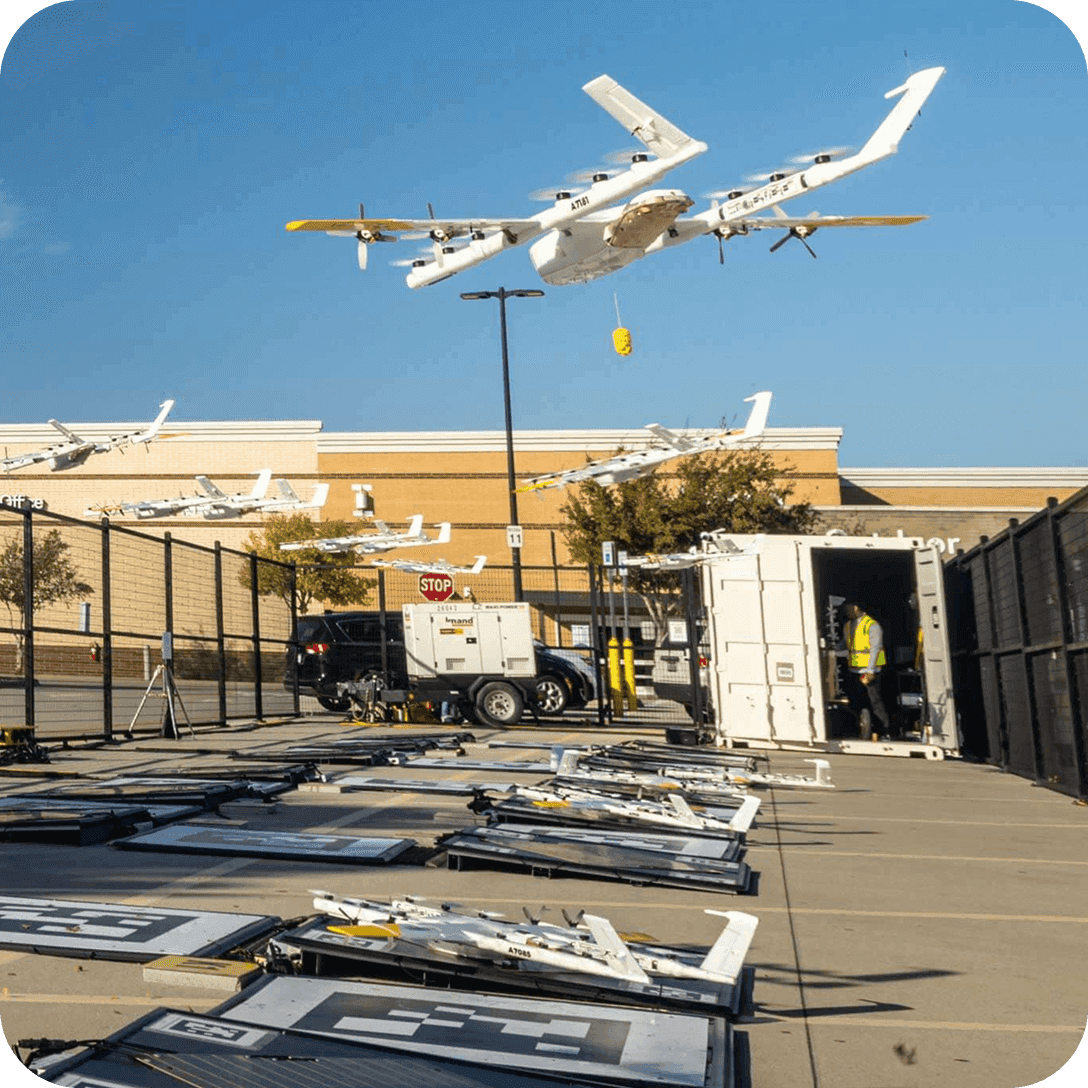
Wing sits inside Alphabet’s Other Bets segment, born out of the Google X moonshot lab in 2018. It is not raising outside capital the way Anduril, Saronic, Skydio, and Shield AI are, so any path to a standalone listing runs through Alphabet’s own decisions about its bet portfolio. That makes Wing the wildcard on this list. It also makes Wing the name with the most flight hours behind it by a wide margin. The operational numbers are hard to argue with. Wing has flown more than 750,000 packages across 500,000-plus commercial flights, reaching 2 million customers. Drones fly autonomously within about six miles of a Wing facility while a remote pilot monitors the flight for situational awareness. In 2026, Wing is moving from pilot programs to a full commercial buildout across the San Francisco Bay Area, its most ambitious US urban rollout to date. Its partnership with Walmart is expanding by 150 stores this year across Los Angeles, Miami, and Nashville.
Alphabet has spun assets out of Other Bets before when a unit hit commercial scale and needed its own capital structure, and delivery drones are edging toward the kind of retail-scale adoption that tends to mark an emerging idea made manifest. Alphabet hasn’t announced any such move for Wing. Investors interested in Wing today are underwriting Alphabet’s overall Other Bets strategy, not a near-term IPO, but thats why I've included some that may be fast tracked below.
Upgrade below to get the rest, plus every future HGR pick.
