


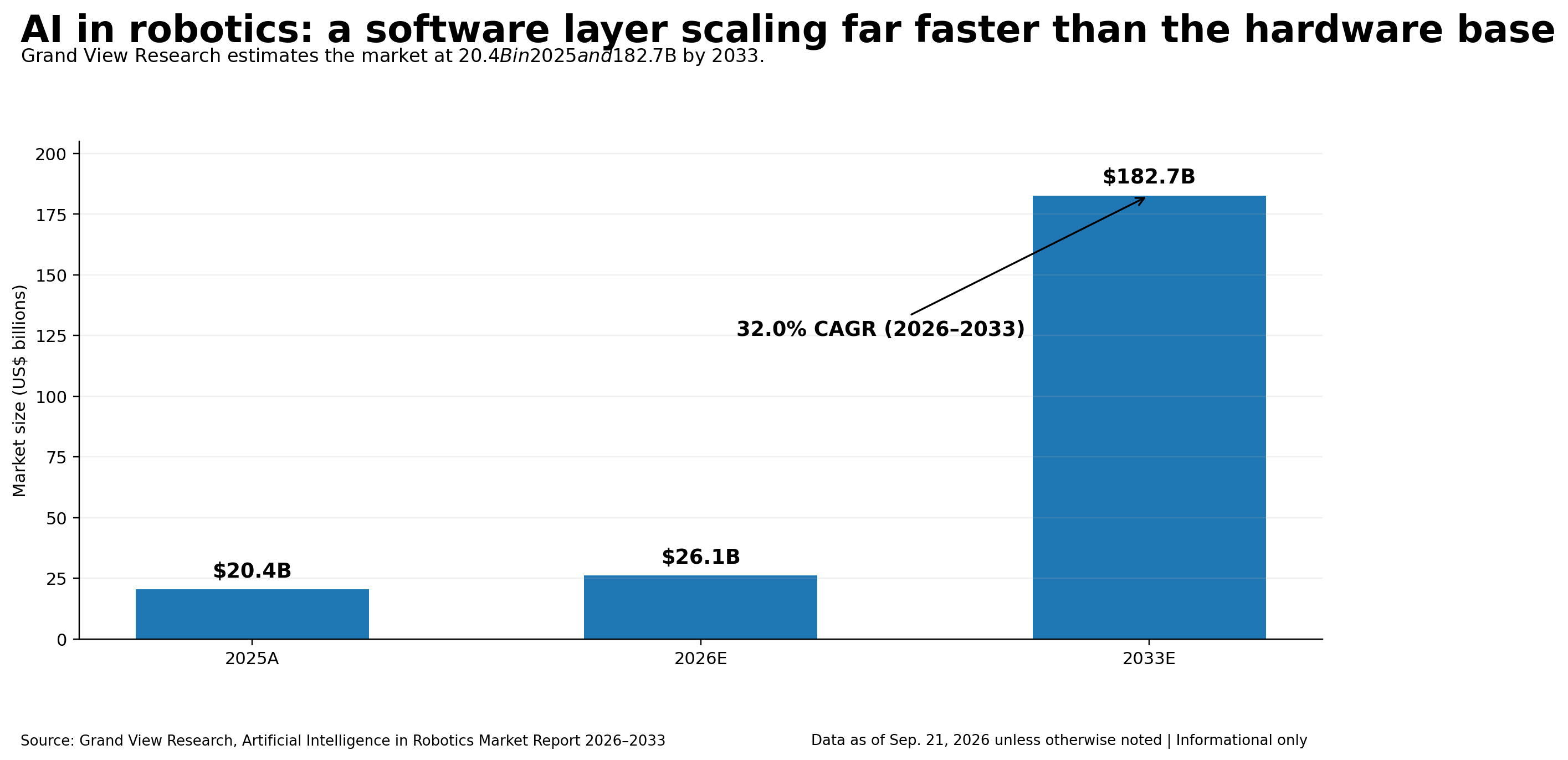
New Age Robotics spent a decade as a concept about the future without a clear path to profitability and scale. In 2026, it turned into a story about revenue. Manufacturers installed 542,000 industrial robots in 2024 alone, more than double the pace from a decade earlier, and the global operating base of working robots has climbed past 4.6 million units. The AI software layer on top of that hardware, the code that lets a machine adapt to a room it has never seen instead of running a fixed script, sat near $20 billion in 2025. Forecasts put it near $183 billion by 2033, a compound growth rate above 30% a year sustained for eight straight years, in a corner of the market many retail portfolios still hold zero exposure to.
Maryna Bautina, a senior AI consultant at SoftServe, says 2026 marks a turning point: robots and AI systems have worked for years in controlled or virtual environments, and this is the year they start learning the way people do, trying something and adjusting when it fails. She points to logistics as the proving ground: warehouse robots that load and sort without a fixed script, and systems that reroute shipments and manage inventory with no human in the loop. Industry trackers watching the robotics buildout point to a different limit than money. The constraint is specialized engineers who can build the autonomy and the systems integration fast enough to keep up with demand. Government spending is is a key focus of the robotics thesis and where we pivot to stocks I’m watching to capitalize on this emerging market.