
I’ve created this guide for the purpose of educating new and seasoned investors on the three strategies I use when leveraging options to increase my potential gains on equities I have high conviction in and see doing well in the emerging markets we cover here at Hidden Gems Research LLC. This guide will be used directly in the Gem Vault Index ($GVLT) when we hit our subscriber goal and start live trading in the new account for all of you! The first three sections will focus on breaking down what these option techniques are, and the last two will move into my specific strategies for how I use them - specific metrics, entries, exits, and what I look for to make the hundreds of thousands that we’ve cleared in 2025 alone.

Options trading can feel complicated when you first step into it, but the three pillars of this guide - Covered Calls, Cash-Secured Puts, and LEAPS - build a surprisingly simple framework once you understand what each one is designed to do. Think of Covered Calls as a way to generate income from shares you already own, Cash-Secured Puts as a way to get paid while waiting for a better entry price, and LEAPS as long-dated leverage that allows you to ride a thesis without overextending capital due to being able to control a lot of shares for a fraction of their cost. Once you internalize how each of these behaves, especially on volatile stocks like the ones we cover at Hidden Gems Research LLC, the entire strategy becomes easy to follow. We will begin with the two pillars of the wheel strategy - cash-secured puts to create a position and covered calls to exit it - and move into LEAPS as an additional strategy for high-conviction value plays after. I will be using the $ACHR aviation options chain in this guide to show real-world examples of what we are covering.
Creating an Entry Using Cash Secured Puts - Wheel Part 1
What if there was a way to get paid for entering a position you want at the price you want instead of just buying shares for market value? There is - it’s called selling Cash-Secured Puts. Instead of agreeing to sell your shares, you’re agreeing to buy shares at a specific price, and you get paid upfront for taking that obligation. With a CSP, the worst-case outcome is that you buy a stock you already wanted at a discount; the best-case outcome is that the stock never reaches your strike and you keep the entire premium for waiting. Investors who use this strategy on tickers like ACHR or similar high-volatility setups understand the real goal: get paid for entering red days. Delta (the likelihood of the contract expiring in the money) helps you understand how close you are to being assigned, while theta (time decay) quietly chips away at the contract’s value as time passes in your favor. When used correctly, CSPs mimic disciplined buying instead of emotional dip-chasing.
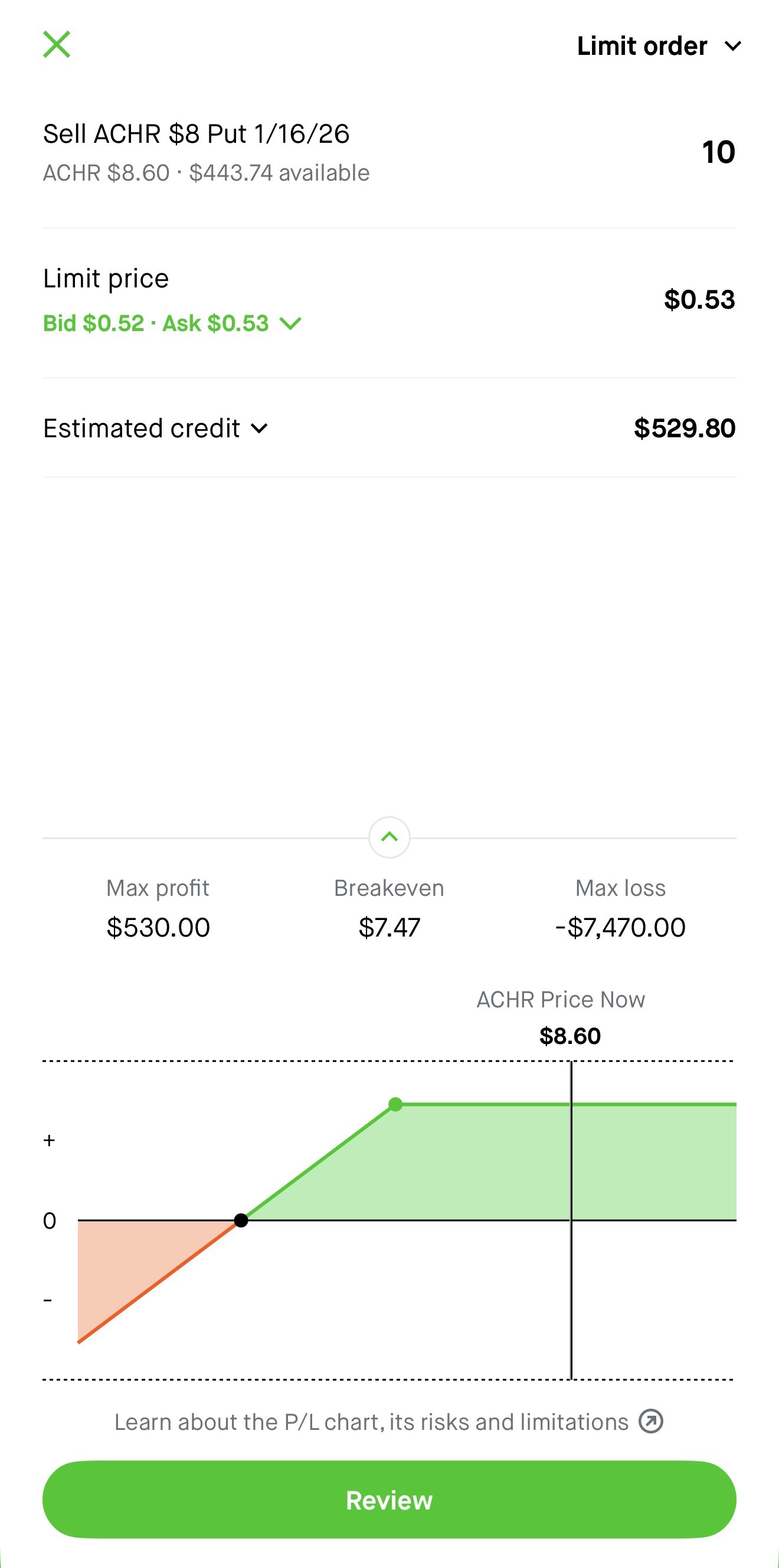
This chart shows a cash-secured put sale at the $8 strike. You collect roughly $530 in premium up-front, lowering your breakeven to $7.47 if assigned. The upside is limited to the premium collected, which occurs if ACHR stays above $8 through expiration. The risk is being assigned 1,000 shares at $8 if the stock drops below the strike. Your max loss equals the assignment cost minus the credit received (in this case $7,470), which only occurs if ACHR goes to zero. This is a bullish strategy used to get paid while waiting for a cheaper entry.
How to Make Money on Shares After You’ve Been Assigned Using Covered Calls — Wheel Part 2
After being assigned via a cash-secured put, you will have the obligation to purchase 100 shares of that stock per contract. This leads us to covered calls. A Covered Call is exactly what it sounds like - you already hold 100 shares of a stock, and you sell a call option against those shares. The core idea is simple: you collect a premium in exchange for agreeing to sell your shares at a predetermined price. For investors who hold positions like $ACHR, $ONDS, $UMAC, $LPTH, or other high-volatility names, Covered Calls act like controlled income harvesting during sharp rallies. When volatility spikes and the stock rips, call premiums surge, giving you a chance to monetize short-term euphoria without touching your long-term thesis. Delta and theta do most of the heavy lifting here. Delta tells you the probability of getting assigned, while theta works in your favor every single day the price stalls or pulls back. On the sell side of options, these Greeks are working in your favor while the contract remains out of the money.
If you get assigned, that’s okay — you can either start the “wheel” anew with cash-secured puts or enter into our next strategy: LEAPS.
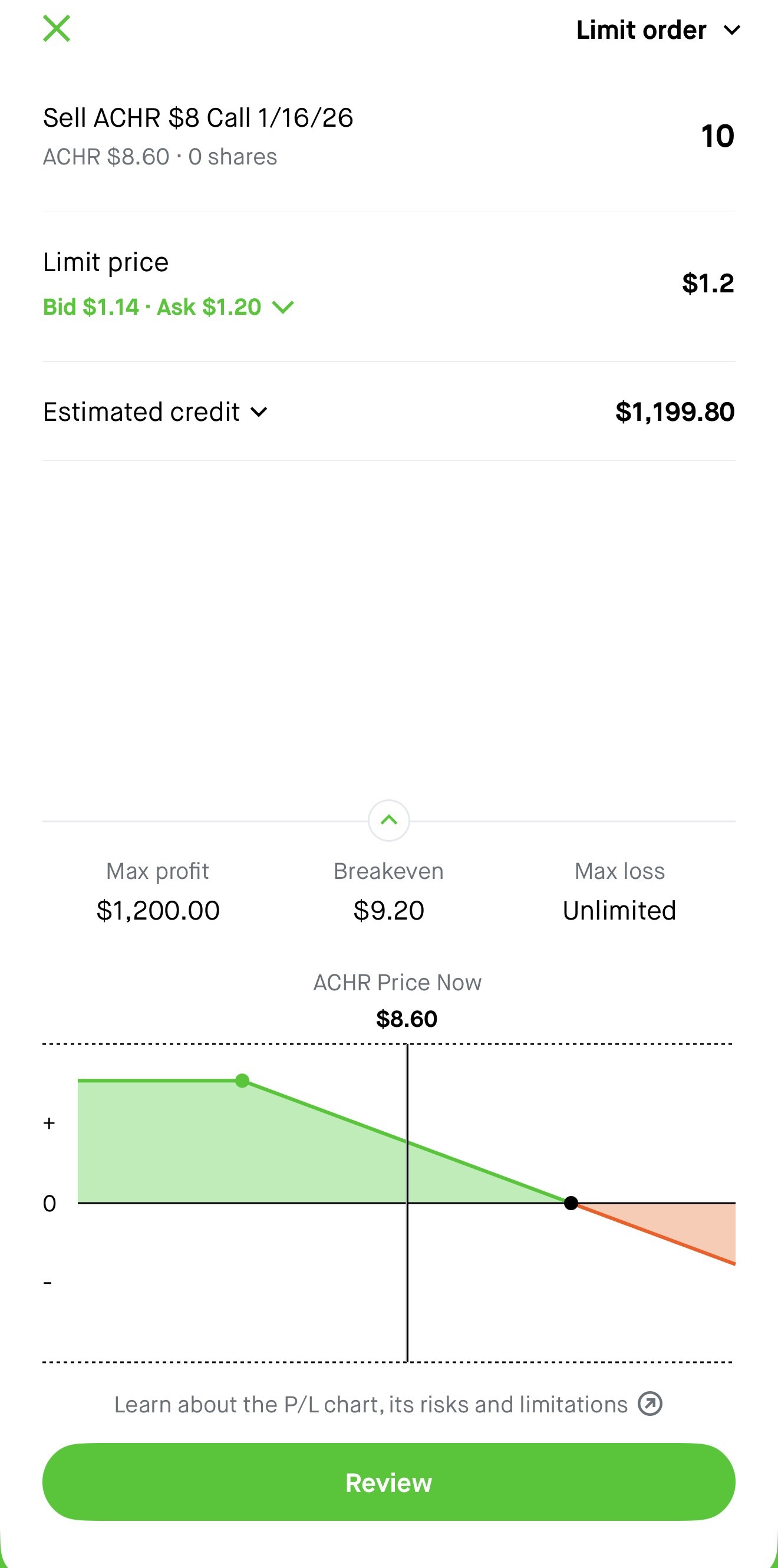
This chart represents selling a covered call at the $8 strike while owning 1,000 shares of ACHR. The max profit is capped at $1,200 from premium plus stock appreciation up to the strike. The breakeven rises to $9.20, highlighting the trade-off between income generation and limiting upside if ACHR rallies hard. The risk is the opportunity cost: your shares may be called away early or at expiration if ACHR trades above $8, meaning you miss gains above the strike. However, because the position is fully covered by shares, there is no risk of unlimited loss.
How to Increase Your Leverage with Smaller Amounts of Capital Using LEAPS (Long-Term Equity Anticipation Securities)
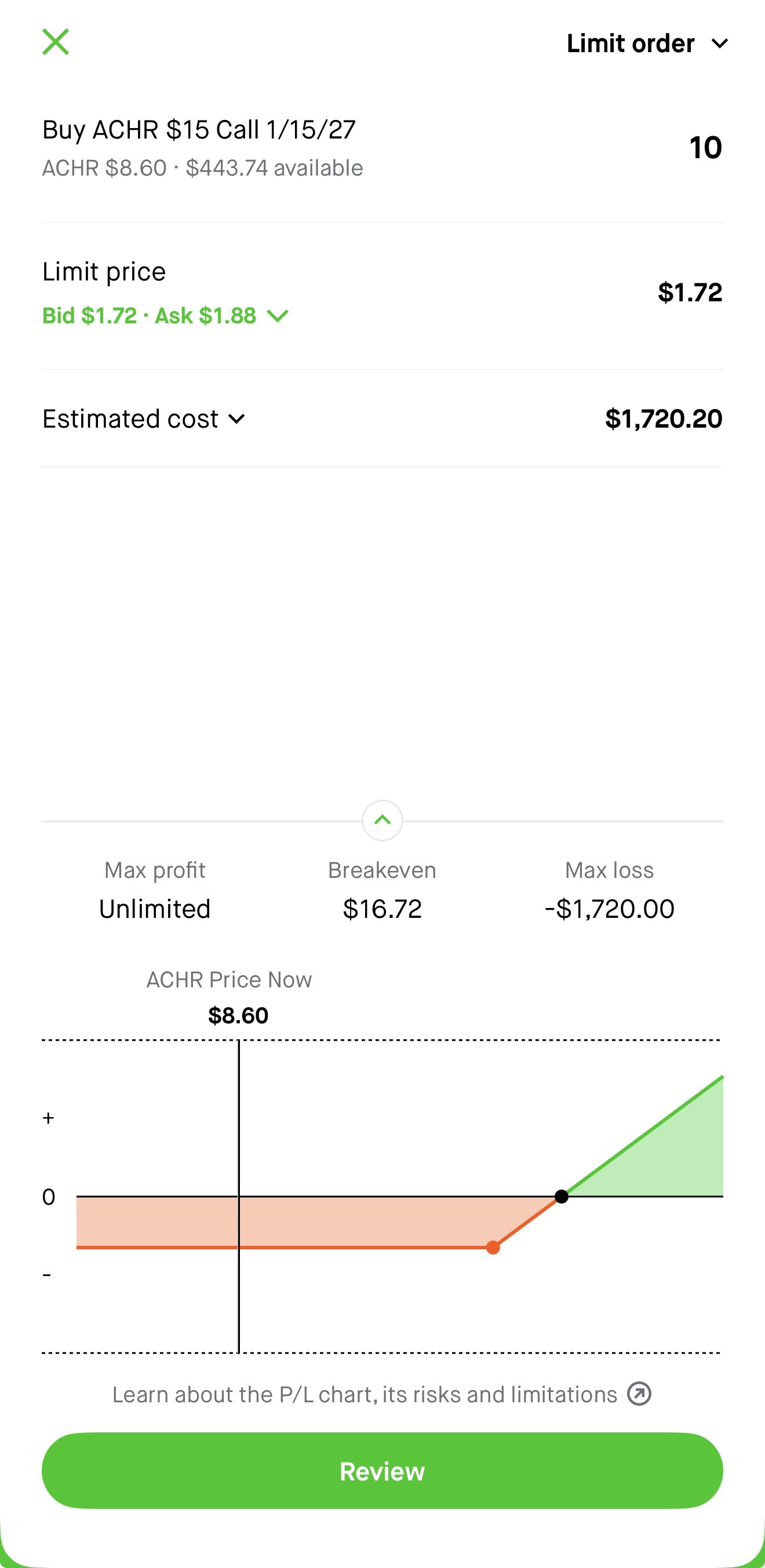
LEAPS - long-dated call options with expirations a year or more away - are a different beast entirely. They’re not income strategies; they’re conviction strategies. A LEAP is essentially a leveraged bet on where you believe a stock will be long after short-term noise clears. Because of their duration, LEAPS behave differently than weeklies or monthlies. They rely heavily on delta and vega, meaning they’re sensitive to long-term directional movement and overall volatility. When you catch the right company at the right time, LEAPS have the potential to give you massive upside without tying up the full capital of 100-share blocks.