


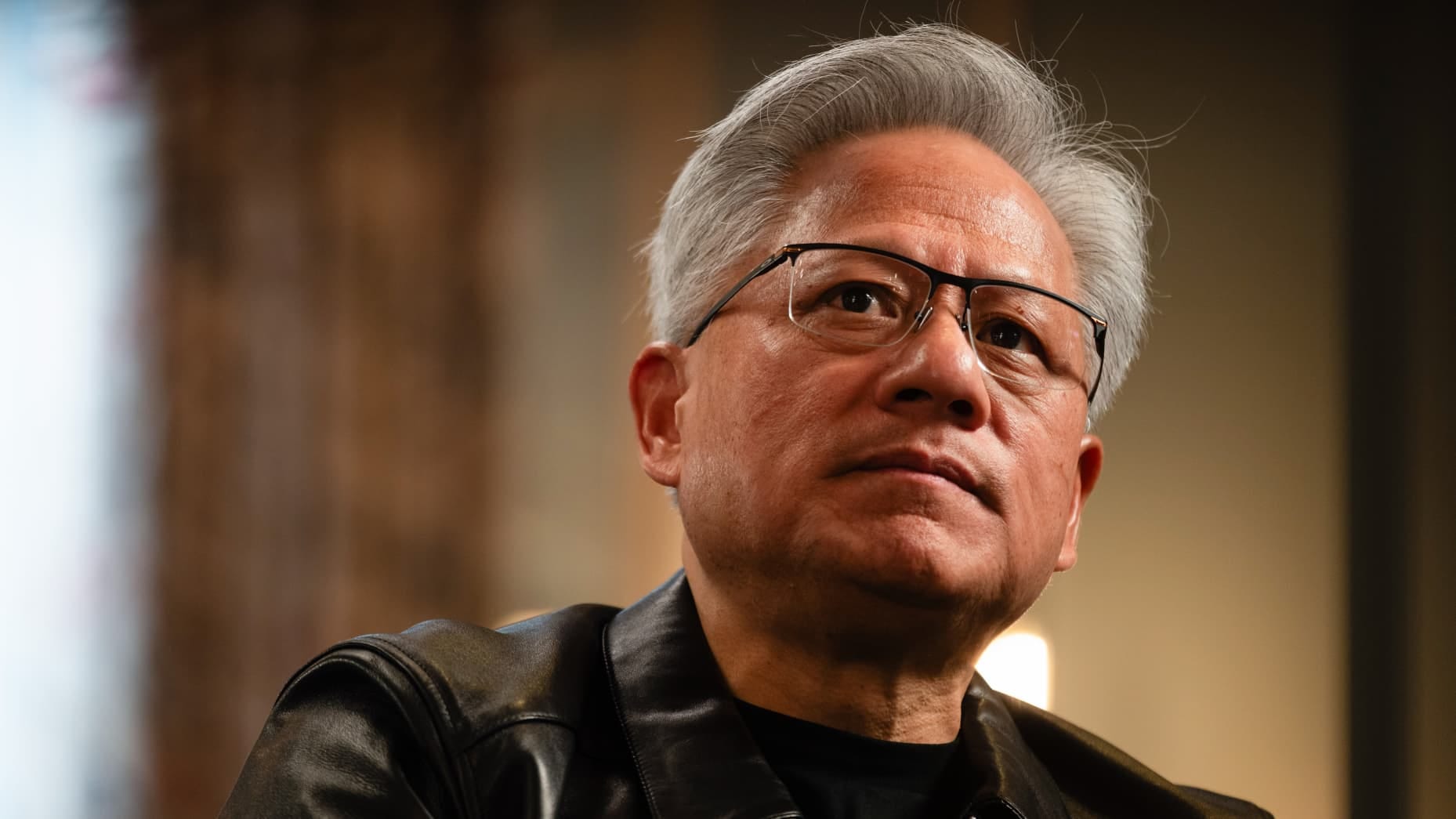
Monday morning, Nvidia’s board put Jensen Huang back in the CEO chair, 11 days after he walked out of it on his own terms. $NVDA ripped 31.5% in one session on the news and has been volatile ever since. My timeline filled up with the same take: crisis over, AI trade back on. I don’t buy it. Two days later the stock had already handed back 9.5% of that pop. The market is telling you the CEO was never the problem. Here is how I’m reading the AI trade right now, why the cracks run deeper than one man, and the three readings that would prove me wrong.
Jensen resigned on November 12 after disclosures about his personal life, including a relationship with Alice Huang, a former executive at Megaspeed, the Singapore data center operator and Nvidia customer. U.S. officials suspect her of ties to Chinese intelligence. Nvidia says earlier claims that Megaspeed diverted chips to China were investigated and debunked. Megaspeed denies illegal shipments. China calls the reports groundless.
The board named CFO Colette Kress interim CEO, and board chair Harvey Jones said the company did not intend to bring Jensen back. Kress hosted the Q3 call on November 17. Then the stock kept bleeding, the board held its first talks with Jensen that Saturday, and by Monday he was reinstated. CNBC reports the board moved after President Trump personally assured it that Jensen had not broken national security laws.
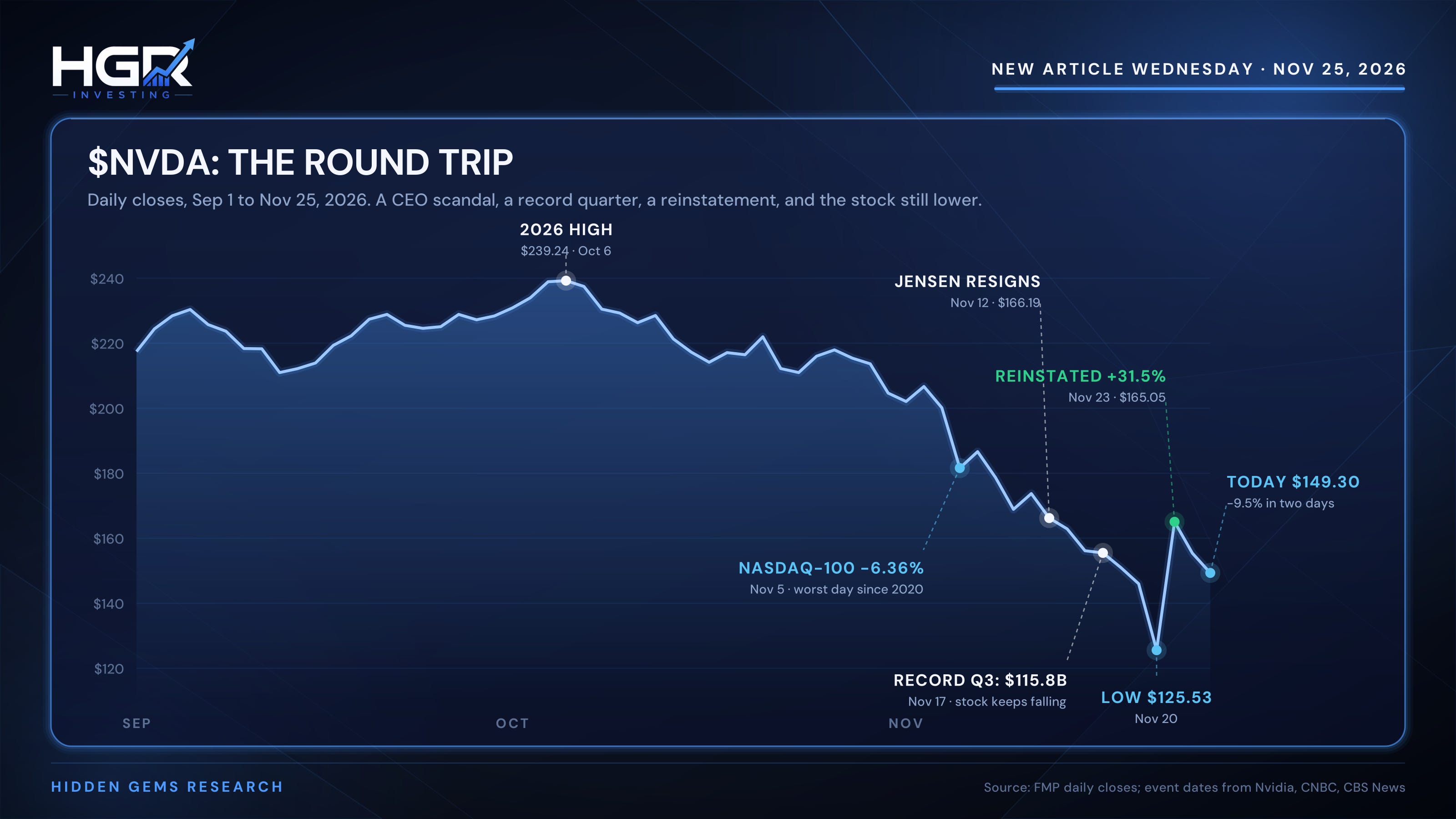
Look at that chart. $NVDA closed at its 2026 high of $239.24 on October 6. It hit $125.53 on November 20. It popped to $165.05 on reinstatement day. It closed today at $149.30. The crazy part is that the overhang hasn’t cleared. Nvidia’s independent investigation is still running. California and Congress are still asking questions. The China channel, already shut by export rules, now carries a spy story on top of it.
THE BUSINESS ISN’T THE PROBLEM
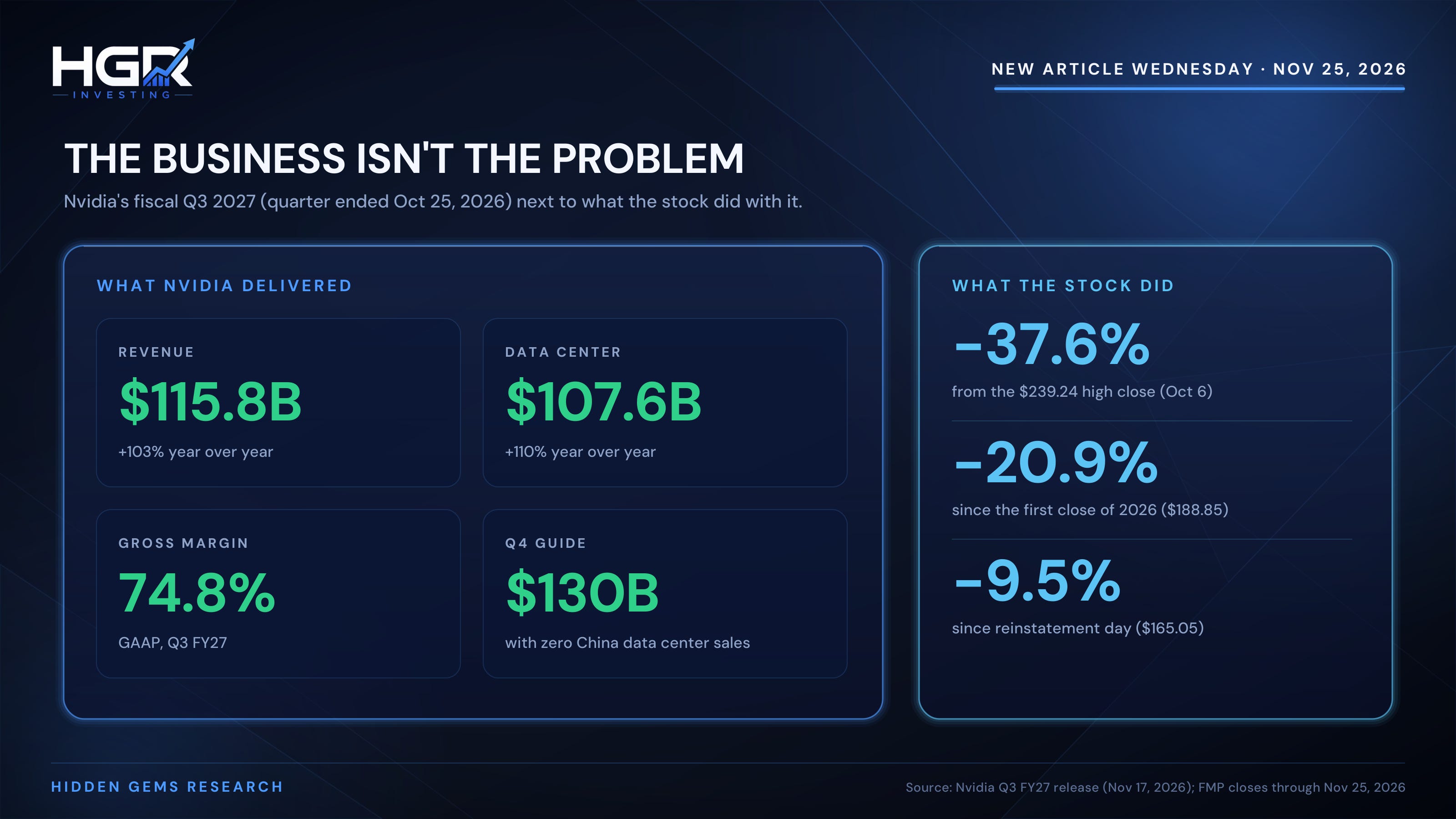
When trying to decipher what’s going to happen next many people gloss over the fact that the business is not the problem. Nvidia just printed $115.8 billion in revenue, up 103% year over year. Data center alone did $107.6 billion, up 110%. Gross margin held at 74.8%. Then they guided $130 billion for next quarter with zero China data center sales baked in. They beat their own guide by almost $8 billion. The stock fell, shrugging off multiple bullish catalysts. It sits 37.6% below its high and about 21% below where it opened 2026. When a record quarter can’t lift the stock, the problem sits somewhere else. Nvidia sells the shovels which is the AI trade I find to be the most promising. The question the market is asking now: can the people buying the shovels keep paying for them?
THE CRACKS ARE IN THE CREDIT
Stocks argue. Bonds keep score.
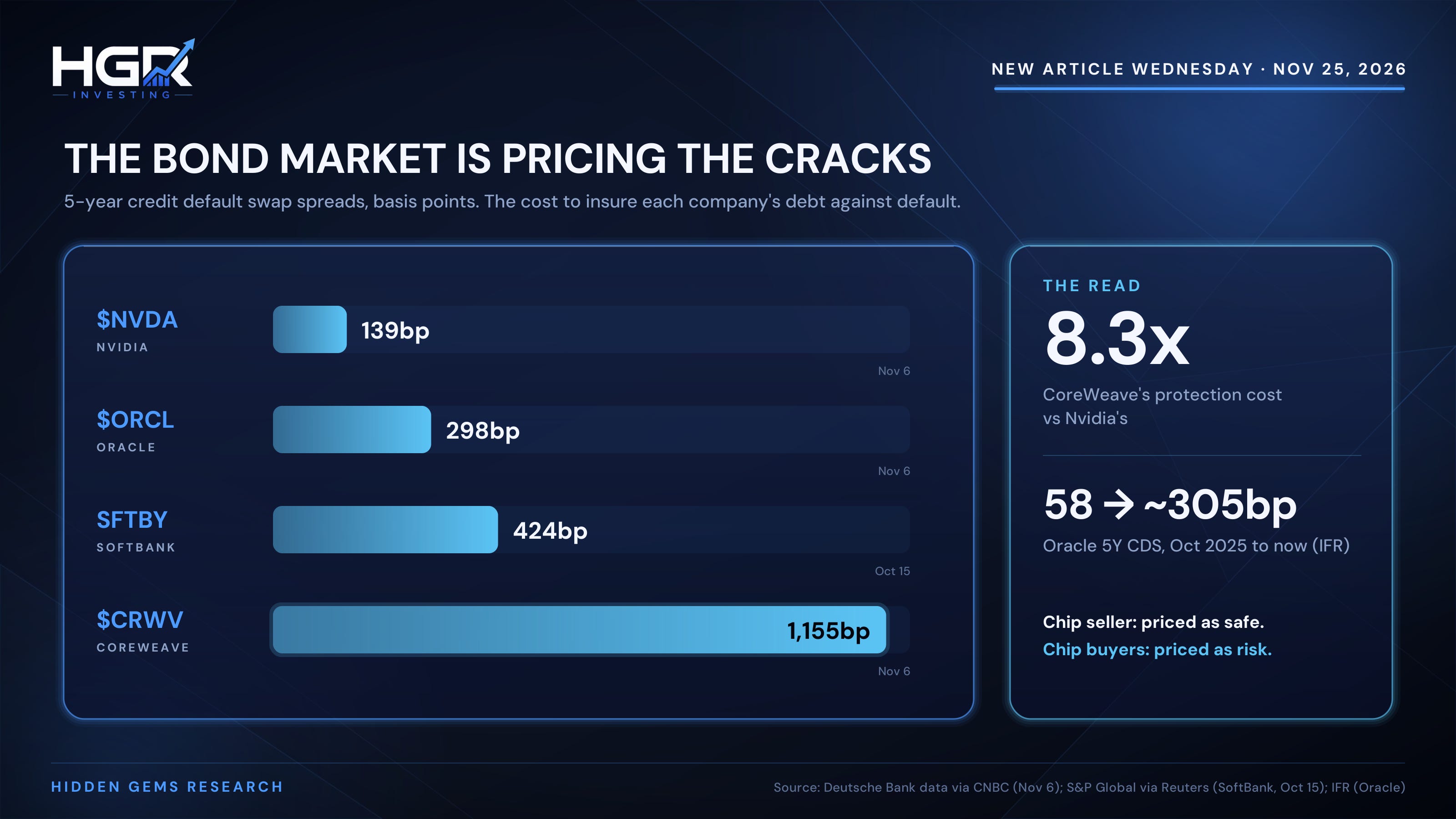
A credit default swap is insurance against a company failing to pay its debt. The higher the spread, the more the market fears a default. On November 6, Deutsche Bank data put five-year CDS at:
NVDA 0.00%↑ = : 139bp. ORCL 0.00%↑ : 298bp. CRWV 0.00%↑ : 1,155bp.
Insuring CoreWeave’s debt costs 8.3 times what it costs to insure Nvidia’s. Oracle protection traded near 58bp in October 2025 and sits around 305bp today, per IFR. AI investor SoftBank hit 424bp in mid-October. One XTB analyst called CoreWeave the AI trade’s canary in the coal mine.
The bond market is pricing the seller as safe and the buyers as risk. That’s the crack. Nvidia’s revenue is somebody else’s capex. A big slice of that capex now runs on borrowed money. The neo-clouds and Oracle lease data centers, borrow against future contracts, and hope AI revenue shows up before the debt comes due. When lenders demand more to fund that bet, the orders behind Nvidia’s guide get harder to finance.
A CEO can’t fix that. Jensen coming back doesn’t change CoreWeave’s cost of capital by a single basis point.
Subscribe for the full story and my gameplan to profit
