



On June 12, 2026, SpaceX rang the bell at the Nasdaq. $135 a share. $75 billion raised. The largest IPO in history. The race has begun.
For two decades, the space economy was something you read about in think-tank reports and Elon Musk tweets. Capital stayed on the sidelines. Institutional investors treated space companies like lottery tickets. The public markets had no real price discovery mechanism for any of it, because the company that runs this industry was private. Not anymore.
SpaceX going public changes the entire calculus. Every fund manager who dismissed this sector because they had no benchmark now has one. Every institutional investor who wanted exposure but had no viable vehicle now has one. That capital will not stay in $SPCX alone. It will move through the ecosystem, the suppliers, the launch customers, the infrastructure builders, and the companies doing the work SpaceX cannot or will not do itself.
The space economy is projected to grow from roughly $600 billion today to over $1.8 trillion by 2035. That growth will not land in one ticker. It lands in a supply chain: launch providers, satellite builders, ground infrastructure, optics and sensor manufacturers, lunar services, and direct-to-device connectivity networks. The picks below cover that entire stack.
We have been building this basket for months. The SpaceX IPO pulled forward a lot of retail attention, then the post-IPO sell-off handed back the entry points. The proxy trade is over, the real one starts now.
Below, I walk through my lead pick in detail. The full six-name basket with entry zones and targets is behind the paywall.
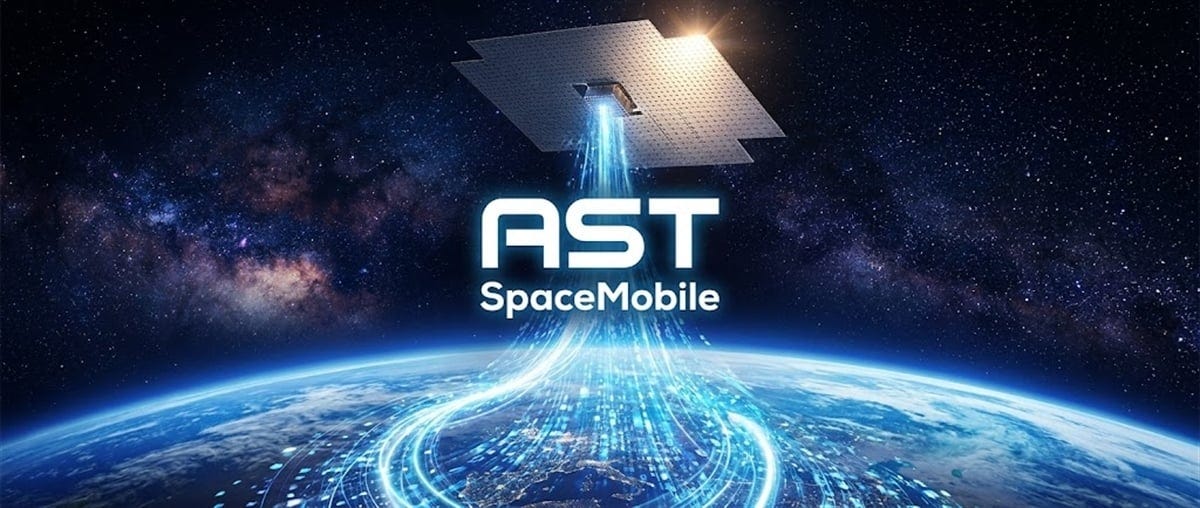
Lead Pick — $ASTS | AST SpaceMobile
$ASTS is trading around $78 after peaking above $133 in late May. The 35% drawdown from the high came from two things: insider selling by the CTO and CFO (which is noise, not thesis change), and the post-SpaceX-IPO rotation that washed out the proxy trade crowd. The underlying business did not change. The satellites keep going up. On June 17, BlueBird 8, 9, and 10 lifted off from Cape Canaveral on a Falcon 9 and reached orbit. That puts AST SpaceMobile on track for its target of 45 satellites in orbit by November 2026. BlueBird 11 through 33 are in advanced assembly now. The FCC granted commercial SpaceMobile service authorization in the United States, which means the company can begin selling the product it has been building for years.
AST SpaceMobile is building the first and only space-based cellular broadband network that works with standard smartphones, no special hardware, no dongle. Existing carriers, nearly 60 mobile operator agreements globally, pay AST to beam coverage into their dead zones. The carriers own the customer relationship. AST owns the space layer.
Revenue guidance is $150–$200 million for 2026, against $1.2 billion in contracted commitments already on the books. The $3.5 billion balance sheet covers CapEx and negative free cash flow through 2028. That is a long runway. Roth Capital puts a two-year lead on AST’s architecture over Starlink Mobile. That gap matters because the satellite buildout takes years, and AST is already launching.
Material Risks
SpaceX is the competitor and the launch provider. That is a real structural tension. The $155–$160 million write-off on BlueBird 7 shows execution risk is real. Losses are widening as the constellation scales. The stock is volatile enough to shake most investors out before the thesis plays out.
My Entry Zone: $70
I want to own $ASTS at $70. That puts me 47% below the May high, with 45+ satellites targeting orbit by November. If it gets there, I am a buyer.
We caught $ONDS before it ran +2600%, $LPTH before it ran +440%, and $UMAC before it ran +340%. Subscribe so you don’t miss the next one.
