



Unusual Machines reported Q4 2025 earnings and had their quarterly call this week to give an overview of their transformative year. The company is rapidly evolving into a U.S.-based drone component manufacturer targeting what it believes is a major domestic supply chain gap across motors, headsets, batteries, and cameras. The headline numbers were strong and the continuous delivery on increased quarterly revenue continues to impress. On top of this I think the bigger story is the shift in how orders are being solicited, filled, and by who. The enterprise revenue mix surged, manufacturing capacity ramped, and the balance sheet was massively strengthened to support what management believes will be a multi-year domestic drone component buildout. If you’re not excited yet you should be. This company is going to be a completely different beast by 2030!

Key Takeaways
Revenue growth remained strong. UMAC 0.00%↑ generated approximately $11.2 million in 2025 revenue, up 101% year over year, while Q4 revenue came in at roughly $4.9 million, up 133% sequentially. This marked the company’s seventh straight quarter of record revenue. The business mix also changed materially. Enterprise revenue went from 31% in Q1 to 81% in Q4, showing how quickly the company is shifting away from being primarily an online drone retail platform and toward becoming a scaled component supplier for enterprise and defense-adjacent customers. Typically enterprise transactions are proceeded by larger, follow-up orders leading to massive, long-term revenue growth.
Margins improved, but their could be a mix of near-term pressure. Gross margin improved from 24% in Q1 to about 36% in Q4, with full-year gross margin at 35%. Taking that into account, management expects gross margin volatility and likely weakness in Q1-Q2 2026 as new hires and process inefficiencies woes move through cost of goods before scale benefits fully show up. This could cause share price fluctuation at next earnings if guidance comes in weaker than expected. With the stock being up over 50% YTD future volatility is definitely something to consider when to take profit.
We also know the balance sheet is looking very impressive. The company raised $157.8 million in equity during 2025 and ended the year with roughly $103 million in cash, more than $157 million in net working capital, and zero debt! That gives UMAC 0.00%↑ the cash needed to aggressively build inventory, expand production, and potentially pursue acquisitions. The CEO, Allan Evans, also stated they see a major domestic supply opportunity which is in line with my drone dominance thesis. UMAC believes recent regulatory and procurement developments have created a supply-constrained U.S. drone market, with domestic demand expected to exceed supply through 2026 and into 2027. This is due to increased foreign restrictions and a focus on domestic production of parts rather than a reliance on China, the worlds current drone leader.
Financial Highlights
Revenue
FY2025 Revenue: ~$11.2M
YoY Growth: 101%
Q4 2025 Revenue: ~$4.9M
Sequential Growth: 133%
This is a small revenue base, but the growth rate and mix shift are what matter most here. The company is clearly trying to position itself early before larger component volumes hit. We now have 7 consecutive quarters of revenue growth. I expect this figure to climb sharply as U.S. government drone orders begin to be filled.
Gross Margin
Q1 2025: 24%
Q4 2025: ~36%
FY2025: 35%
Q4 margin came in above management’s internal expectations, which is encouraging. Still, Allan Evans was very direct that investors should expect the weakest gross margins in Q1-Q2 2026 as the company digests a massive operational ramp.
Operating Expenses
2025 OpEx: $29M
2024 OpEx: $18.5M
The increase was driven by $15.6M in non-cash stock compensation, hiring, and headcount ramp, facility expansion, systems investments, and scaling costs which are all in line with the thesis. We need early expansion to capitalize on long term growth objectives. If they can become the day one supplier for drone companies winning DoD contracts, I would expect repeat business.
Balance Sheet
Cash: $103M
Inventory + prepaid inventory: $15M+
Debt: None
That cash position is one of the biggest takeaways from the quarter. Unusual Machines now has the balance sheet to build out aggressively into anticipated demand. We already know that they are pre-prepping component orders for imminent orders. Its risky but gives them an advantage over the competition who are waiting for tickets to hit the books.
The Enterprise Shift
This was one of the most important parts of the earnings call that peaked my interest. Unusual Machines is becoming an enterprise powerhouse looking to provide production for large companies rather than individual buyers. Over 2025, the company increasingly became an enterprise-focused component provider, with enterprise mix climbing each quarter from 31% in Q1 to 81% in Q4, a dramatic change in only a years time. Management repeatedly emphasized that 2025 was the year where the company transitioned from an online retail store into a drone parts producer and enterprise sales business. Retail still matters, but mainly as a sales funnel where customers can buy parts for R&D before scaling into larger production orders. Id expect them to continue some retail relations through their subsidiaries and connections with the Drone Nerds Storefront. The real money will come from enterprise and large contractors.

The U.S. Drone Component Market Focus
Unusual Machines believes this is being driven by two major forces and I concur. The first being foreign competition is being pushed out due to increased regulations by the FCC. T-Motors being added to the Entity Covered List in 2025, tariff pressure on imports, and the ban on new licenses for foreign-made drones and drone parts, that went into effect in late December 2025, are all catalysts supporting this domestic drone movement. Evans said this created a “major vacuum across both consumer and enterprise markets” which checks out when viewing the situation from a macro perspective.
Government demand is also accelerating. It is easy to see that they will provide the fuel for future demand and growing Pentagon interest in low-cost drones and domestic supply chain readiness, especially through programs like SRR, PBAS, and Drone Dominance. According to Evans, the U.S. small-drone market is about $10 billion annually, implying a $3B-$5B addressable market for parts if domestic sourcing requirements continue tightening. It needs to be noted that there are very few domestic companies that can source this component demand. UMAC 0.00%↑ is a prime in the FPV headset and motor component space. They are the play.
Drone Dominance Will Be A Major Catalyst
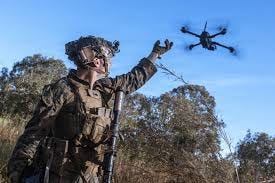
This was another focal point on the call. The Department of Defense plans to buy 90,000 low-cost drones in 2026 and an additional 250,000 drones in 2027 which could provide a $90 and $250 million component order infusion for 2026 and 2027 respectively. Those are immense numbers relative to UMAC’s current revenue base and market cap. If they could capture even 25% of that it would be a game changer. UMAC 0.00%↑ currently has about $12 million in outstanding purchase orders with $9 million of that tied to programs outside Drone Dominance. Most importantly, more than half of the first 11 announced Drone Dominance winners are already customers “in some form or fashion.” Relationships are everything and the company is already layering in initial deals behind the scenes.
Production Ramp Is The Next Big Test
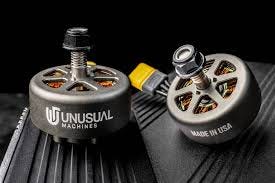
The strategy only works if the company can actually manufacture at scale and deliver on time. Here’s where things stand: Motor production started in November with current run rate at 15,000 motors per month. Second and third shifts have been added at the massive motor factory to boot. A second shift was also added at the flexible production facility meaning they are working around the clock to meet fresh demand on the cusp of being needed. There is an ongoing innitiative to start an automated motor line that should be ready in the second half of 2026 which could produce over 100,000 motors a month at full capacity, far exceeding current production.
We also have Fat Shark FPV headsets starting to take off. with the first U.S.-made units produced in January. They are currently targeting 100 headsets per shift per day by April. Battery packs and cameras are also on the docket with plans for production start in the second half of 2026 as well. It’s exciting to watch UMAC 0.00%↑ become the one stop shop for all drone component needs.
Summary
This was a very important quarter for Unusual Machines because it showed the early shape of a company trying to become a real domestic picks-and-shovels supplier for the U.S. drone market. We have major green flags in the rapidly rising enterprise mix, stark balance sheet improvement, expanding production footprint and automation, aggressive hiring, and a market backdrop that will genuinely favor U.S.-based component suppliers.
The biggest question now is simple: can they execute the ramp to fill demand orders?
If UMAC can scale motors, headsets, batteries, and cameras while maintaining customer relationships and delivering into programs like Drone Dominance, the current revenue base could end up looking tiny in hindsight and the gains from share appreciation massive. This is still an execution story first. The balance sheet gives them room. The market gives them opportunity. Now they have to prove they can turn that into consistent production and revenue scale. My bet is that they can.
Please Like and Restack if you enjoyed!
Disclaimer
The information provided in this publication is for educational and informational purposes only. Nothing in this content should be interpreted as a recommendation, solicitation, or offer to buy or sell any security. I do not provide personalized investment advice or individualized recommendations. All examples, tickers, scenarios, and analyses are strictly for general educational discussion.
The views expressed are my own and do not represent the views, policies, or recommendations of any employer, broker-dealer, or affiliate. Any securities referenced are used solely as case studies to demonstrate research methods and analysis frameworks.
Investing involves risk, including the potential loss of principal. You are solely responsible for your own investment decisions. Consult a licensed financial professional for personalized guidance.